
Athletic Players / Deep Dives
RAWPOWER
Strength is not a feeling. It is measurable force applied against resistance — a physiological fact expressed in kilograms, watts, and newtons. Every sport rewards it differently. The barbell tells no lies: the bar either moves or it doesn't, and the athletes who move the most weight, fastest, relative to their own mass, are the ones this page is about.
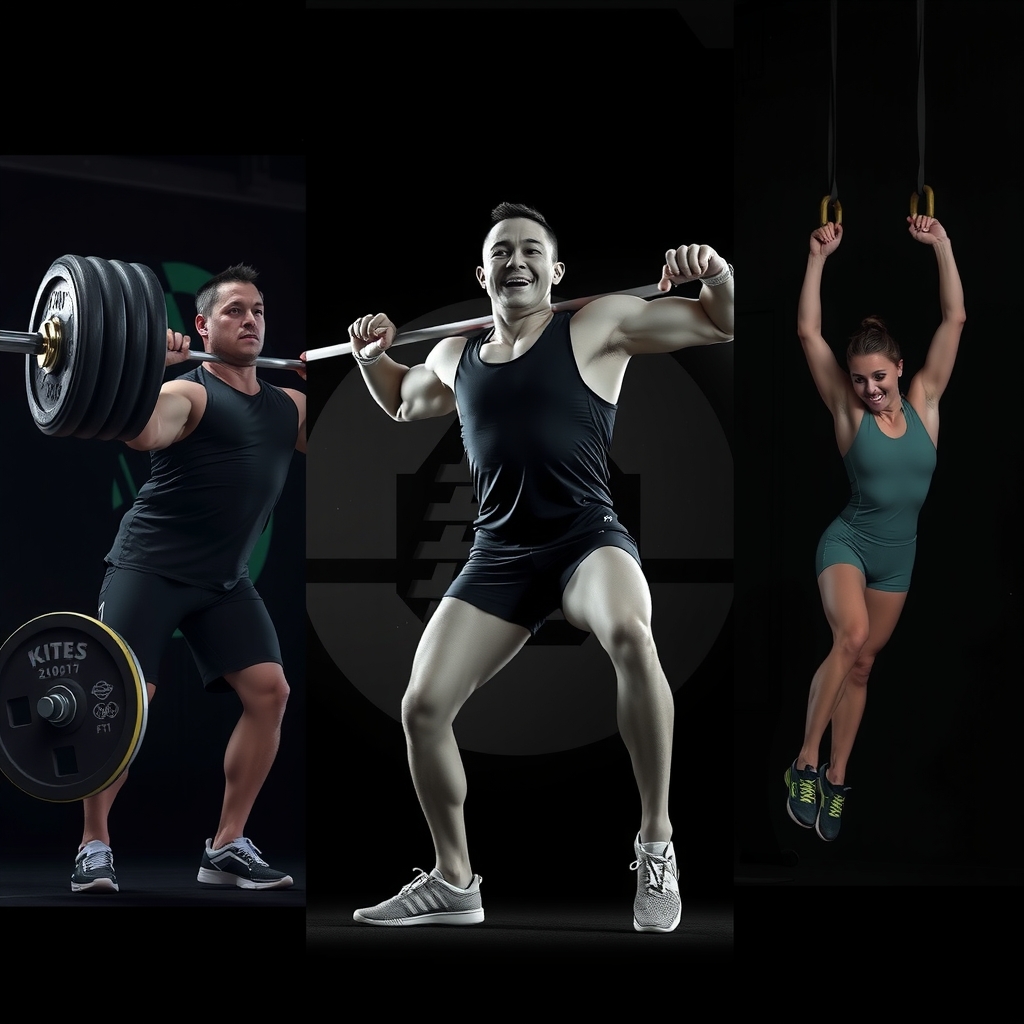
Athletic Strength
THREE
KINDS
OF
FORCE
Peak force a muscle group can produce — one effort, no time limit. The raw ceiling. Powerlifters and strongman competitors live here. A single squat at 300kg is not an athletic feat until it is.
Rate of force development in milliseconds. A 200kg deadlift means nothing on a 100m start. Sprinters, jumpers, and throwers need force applied so fast that speed and strength become indistinguishable.
Force per kilogram of bodyweight. The gymnast pressing to a planche at 65kg. The wrestler controlling a 120kg opponent from half their mass. This metric ranks athletes across weight classes — it is also the most brutal truth.
ON THE PLANET
Ranked by cross-discipline criteria: maximum force output, competition record, relative strength coefficient, and verified performance data. See the full global rankings.
Compare these athletes against other metrics at Top Female Athletes and Top Male Athletes.
HOW
STRENGTH
IS PROVEN
Labs measure force. Competition measures nerve. The best tests do both — which is why three protocols dominate elite assessment and a fourth is now forcing scientists to rethink everything they thought they knew about force production.
| Test | What It Measures | Protocol | Elite Benchmark (M / F) | Sport Relevance |
|---|---|---|---|---|
| 1-Rep Max (1RM) | Absolute maximum force | Progressive loading until failure; heaviest successful lift scored | Squat: 260kg+ / 160kg+ | Powerlifting, Strongman |
| Force Plate Jump | Rate of force development; peak power in watts | Countermovement jump on calibrated force plate; impulse measured | 5000W+ / 3500W+ | All team sports, sprinting, agility athletes |
| Isometric Mid-Thigh Pull | Maximal isometric force; peak force (N) | Fixed bar pull at 120° knee flexion; 5-second max contraction | 4000N+ / 2800N+ | Strength sport profiling, rehab clearance |
| Relative Strength Index | Force relative to bodyweight | 1RM divided by bodyweight; cross-class comparison | 3.0+ BW squat / 2.5+ BW squat | Combat sports, gymnastics, weightlifting |
| Velocity-Based Training (VBT) | Bar speed at varying loads; power curve | Linear encoder or accelerometer attached to barbell; m/s tracked | 1.3m/s+ at 30% 1RM | Sport-specific power profiling |

TRAIN
LIKE A
FORCE
The adaptation stops where the stimulus stops. Add load, volume, or velocity — systematically, not randomly. Athletes who plateau chose comfort over progression.
A powerlifter and a sprinter both train strength; they share almost no methods. The force angle, contraction speed, and muscle recruitment pattern must mirror the sport. Generic lifting is a starting point, never an endpoint.
Eccentric → Isometric → Concentric phases trained in isolation. Cal Dietz's model. Force absorption precedes force production — most athletes train the second and ignore the first.
Strength is built between sessions, not during them. Central nervous system fatigue from heavy lifting requires 48–72 hours. Athletes who train daily heavy are accumulating debt. See how endurance demands change that calculus entirely.
For mental side of strength performance, read Mental Toughness.
DEBATE:
STRONGEST
SPORT?
Rugby props absorb 8 tonnes of force per scrum. Olympic weightlifters generate 3× bodyweight in 1.2 seconds. Strongmen move refrigerators for distance. Every discipline claims the title — and every claim has a legitimate argument that the others cannot fully dismiss.
Our verdict: Strongman produces the broadest application of max strength across disciplines — overhead, pull, carry, hold, push — but Olympic weightlifting produces the single highest documented rate of force development in human sport. Both answers are correct. The question is what you value: peak force or peak velocity of force. Take the argument further at the Debate Zone.